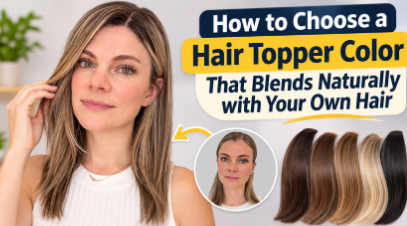
How to Choose a Hair Topper Color That Blends Naturally with Your Own Hair
Finding a human hair topper that looks natural involves more than choosing a shade that appears similar to your current hair color. The way different tones blend together, how your roots compare, and even the lighting around you can all influence the final result.
For women exploring hair toppers for the first time, color selection can feel challenging. However, understanding a few basic color-matching principles can make the process much easier and help create a seamless, natural-looking hairstyle.
1. Focus on Color Harmony Rather Than an Exact Match
Your natural hair is rarely one uniform shade. It often contains subtle variations in tone, highlights, and darker sections, particularly around the roots and underneath layers.
For this reason, a hair topper does not always need to match every strand of your bio hair perfectly. Instead, look for a shade that complements your overall hair color and blends naturally with the surrounding strands.
For example, if your hair has warm brown undertones, a topper with similar golden or caramel tones may create a more cohesive appearance. If your natural hair is cooler, ash brown or neutral shades may work better.
The goal is to achieve a balanced color transition rather than an exact color match.
2. Pay Attention to Your Root Color
One of the most important details when selecting a hair topper is your natural root shade.
Since the parting area and top sections of a hairstyle are often more visible, noticeable differences between the topper’s roots and your own roots can make the hairpiece look less natural.
If your hair has darker roots and lighter lengths, consider a topper with a similar rooted effect. This can help create a more gradual transition between the hairpiece and your natural hair.
Rooted shades are also useful for women with highlighted, balayage, or dimensional hair colors because they replicate the natural depth found in many hairstyles.
3. Understand Warm, Cool, and Neutral Undertones
Two hair colors may look similar at first glance but appear quite different when placed side by side. This often happens because of differences in undertones.
Understanding these three basic color categories can help narrow down your choices:
- Warm tones: Golden blonde, honey brown, caramel, and reddish-brown shades. These colors create a warmer, sun-kissed appearance.
- Cool tones: Ash brown, mushroom brown, and smoky blonde. These shades have subtle gray or beige undertones and create a softer, cooler finish.
- Neutral tones: Balanced shades that combine warm and cool characteristics without leaning strongly in either direction.
When comparing different hair topper colors, pay attention to the undertones rather than relying solely on how light or dark a shade appears.
4. Compare Colors Under Natural Lighting
Product photos are helpful when browsing different hair topper shades, but they cannot always show the exact color you will see in person.
Screen brightness, photography lighting, and surrounding colors can all affect how a shade appears. A brown topper might look warmer under indoor lighting but appear cooler in natural daylight.
For a more reliable comparison, examine your own hair near a window or outdoors in indirect daylight. Avoid relying entirely on bathroom lighting or direct sunlight, as both can influence color perception.
If possible, compare physical hair swatches against your natural hair. This gives you a better understanding of how the colors interact before making a final decision.
5. Consider How Much of Your Natural Hair the Topper Covers
The size and coverage of a hair topper can also influence how precise your color match needs to be.
A smaller topper leaves more of your natural hair visible around the sides and back. In this situation, choosing a complementary shade is particularly important because the two hair colors will be seen together.
A larger topper covers more of the crown and surrounding areas, which may provide greater flexibility when selecting a shade. However, the exposed sections of your natural hair should still blend harmoniously with the topper.
Think about your preferred hairstyle and how much of your natural hair will remain visible before deciding which color is most suitable.
6. Don’t Rush the Color Selection Process
Choosing a hair topper shade online can take some patience, especially if you are unfamiliar with professional hair color terminology.
Here are a few practical ways to make the process easier:
- Review product descriptions to understand whether a shade is warm, cool, neutral, or rooted.
- Compare several shades rather than choosing based on a single product photograph.
- Use physical color swatches whenever possible to evaluate shades against your own hair.
- Take clear photos of your natural hair in daylight if you need professional color advice.
- Consult an experienced hair specialist if you are unsure which shade will complement your existing color.
If you are choosing a human hair topper, professional color guidance can also help you understand whether a particular shade is suitable for future styling or customization.
Final Thoughts
Choosing the right hair topper color is ultimately about creating a natural transition between the hairpiece and your own hair. An exact match is not always necessary, but paying attention to root depth, undertones, lighting, and overall color harmony can make a noticeable difference.
Take time to compare different shades and consider how the topper will look with your everyday hairstyle. With a thoughtful approach to color selection, finding a hair topper that complements your natural appearance can become a much simpler experience.