Bezel vs Prong Settings: Which Ring Style Truly Suits Your Lifestyle?
When it comes to choosing an engagement ring or a fine jewelry piece, the setting is just as important as the stone itself. The way a diamond or gemstone is held in place affects not only its visual impact but also its durability, maintenance requirements, and how well it integrates into your daily life. Among the most debated choices in the jewelry world are the bezel and prong settings — two classic approaches that each carry distinct advantages and aesthetic personalities. Understanding the difference between them can transform a potentially overwhelming decision into a confident, informed choice.
The Fundamentals of Ring Settings
A ring setting is the architectural framework that holds a gemstone securely in place. It determines how much of the stone is visible, how light interacts with it, and how protected it remains against everyday wear and tear. While there are many setting styles available — pavé, channel, tension, halo, and more — bezel and prong settings represent two of the most enduring and widely chosen options in fine jewelry. Each has a rich history and a loyal following, and each serves a different kind of wearer.
What Is a Prong Setting?
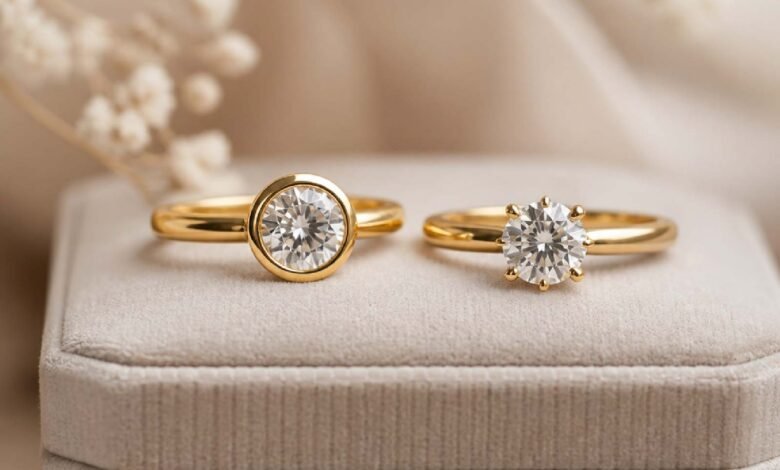
The prong setting is perhaps the most iconic ring design in the world. It uses small metal claws — typically four or six — that grip the stone at its girdle, holding it elevated above the band. This elevation allows maximum light to enter the gemstone from all angles, producing the brilliant sparkle that diamonds are celebrated for. The classic six-prong Tiffany-style solitaire is a direct product of this design philosophy. Prong settings are beloved for their ability to showcase the stone with minimal metal interference, making the gem the undisputed focal point. However, the exposed nature of the prongs means they can catch on fabrics, bend over time, or wear down — particularly for those with physically demanding lifestyles.
What Is a Bezel Setting?
A bezel setting encircles the gemstone with a continuous rim of metal, holding it flush or slightly raised within a protective collar. This design offers superior protection for the stone’s edges, making it far less susceptible to chipping or accidental impact. The bezel setting has a clean, modern aesthetic that appeals to minimalist sensibilities, though it also has deep roots in antique and Art Deco jewelry traditions. Because the metal wraps around the stone, there are no protruding prongs to snag on clothing or scratch skin — a significant practical advantage for active individuals.
Lifestyle Considerations: The Deciding Factor
For many buyers, the choice between bezel and prong settings ultimately comes down to how they live their lives. A professional athlete, a nurse, a sculptor, or anyone who works with their hands frequently will find that a bezel setting offers peace of mind that a prong setting simply cannot match. The enclosed design means the stone stays protected during workouts, outdoor adventures, and hands-on work. Conversely, someone who prioritizes maximum brilliance and traditional elegance — and who is mindful about removing their ring during strenuous activities — may find the prong setting’s luminous display worth the extra care it demands.
For those navigating this decision, a detailed comparison of Bezel vs Prong Settings from the perspective of active lifestyles offers invaluable guidance. The analysis covers how each setting performs under real-world conditions, addressing concerns about stone security, maintenance frequency, and long-term wearability — all critical factors for anyone who refuses to compromise between beauty and practicality.
Aesthetic Appeal and Design Versatility
Beyond practicality, both settings carry strong aesthetic identities. Prong settings have a timeless, romantic quality that has made them the default choice for engagement rings across generations. The way they lift a diamond skyward, allowing it to catch light from every direction, creates an undeniable visual drama. For round brilliant cuts and oval stones, prong settings are particularly flattering, amplifying the stone’s natural fire and scintillation.
Bezel settings, on the other hand, lend themselves beautifully to geometric and contemporary designs. They work exceptionally well with emerald cuts, cushion cuts, and round stones, giving the ring a sleek, architectural quality. Many modern jewelry designers favor bezel settings for their ability to create a seamless, sculptural look. Interestingly, bezel settings also have a strong presence in vintage and heirloom jewelry, where the enclosed metal frame adds a sense of solidity and permanence. Exploring classic jewelry designs with lasting appeal reveals just how frequently bezel settings appear in pieces that have stood the test of time across decades and even centuries.
Metal Choice and Its Interaction with Settings
The metal you choose for your ring band also plays a role in how each setting performs and looks. Platinum, known for its durability and density, is an excellent choice for bezel settings because it holds its shape well over years of wear. White gold offers a similar aesthetic at a lower price point, though it requires periodic rhodium plating to maintain its bright finish. Yellow gold and rose gold both complement bezel settings beautifully, adding warmth and contrast against the stone. For prong settings, platinum is again a strong choice because its strength reduces the risk of prongs bending or breaking — a critical consideration for protecting a valuable gemstone.
Celebrity Influence and Cultural Trends
Popular culture has long shaped jewelry preferences, and engagement rings are no exception. High-profile proposals frequently set trends that ripple through the broader market for years. Many celebrities have chosen prong-set solitaires for their classic grandeur, while others have opted for bezel-set designs that reflect a more contemporary, understated elegance. A look at how celebrity engagement rings have evolved over the decades shows a fascinating interplay between traditional prong settings and the growing popularity of bezel and other protective styles — a shift that mirrors broader lifestyle changes and a growing appreciation for wearable, practical luxury.
Leon Diamond: Craftsmanship Tailored to Your Life
Leon Diamond has built its reputation on the belief that fine jewelry should be as functional as it is beautiful. With decades of experience crafting engagement rings and fine jewelry pieces, the brand understands that no two customers are alike. Whether a client is drawn to the luminous drama of a prong setting or the secure elegance of a bezel, Leon Diamond’s artisans bring the same level of precision and care to every piece. Their commitment to quality extends beyond aesthetics — it encompasses the structural integrity of every setting, the sourcing of ethically obtained diamonds, and the personalized guidance they offer to every customer navigating one of life’s most meaningful purchases.
Making the Right Choice for You
There is no universally correct answer in the bezel versus prong debate. The right setting is the one that aligns with your lifestyle, your aesthetic preferences, and the way you intend to wear your ring. If you lead an active life, work with your hands, or simply prefer a low-maintenance piece that requires minimal adjustment over the years, a bezel setting may be your ideal match. If you prioritize maximum brilliance, traditional elegance, and are willing to invest in periodic maintenance, a prong setting will reward you with unmatched visual impact. The most important step is to approach the decision with clarity about your own needs — and to work with a jeweler who takes those needs seriously.
Conclusion
Choosing between a bezel and prong setting is one of the most consequential decisions in the ring-buying process, yet it is one that many buyers overlook in favor of focusing solely on the stone. Both settings have earned their place in the canon of fine jewelry for good reason — they each offer a compelling combination of beauty, function, and craftsmanship. By understanding the strengths and limitations of each, and by honestly assessing how your ring will fit into your daily life, you can make a choice that brings lasting satisfaction for years to come.
For More Information Visit: Rare Magazine