When Your Gums Signal a Heart Problem: The Oral-Systemic Connection Explained
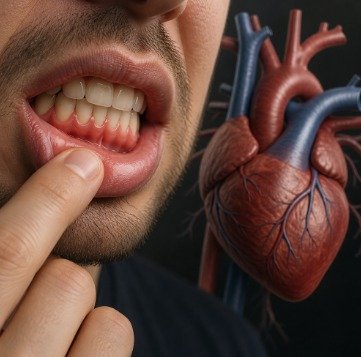
Most people think of a dental appointment as something separate from their cardiovascular care a routine cleaning, perhaps a filling, and nothing more. But mounting clinical evidence is reshaping that assumption. The mouth is not an isolated system. It is a gateway to the rest of the body, and the state of your gums may be quietly communicating something critical about the health of your heart. Understanding the oral-systemic link is no longer optional for patients who want a complete picture of their long-term health.
The Biology Behind the Connection
Periodontal disease — commonly known as gum disease — is a chronic bacterial infection of the tissues that support the teeth. When left untreated, it progresses from mild gingivitis to severe periodontitis, destroying bone and soft tissue. What makes this particularly relevant to cardiovascular health is not the infection itself, but the systemic inflammatory response it triggers.
When harmful bacteria colonize the gum pockets, the immune system responds with inflammation. In a healthy, contained infection, this response is localized. But in chronic periodontal disease, the inflammation becomes persistent and systemic. Inflammatory markers such as C-reactive protein (CRP) and interleukin-6 elevate throughout the body. These same markers are strongly associated with atherosclerosis — the buildup of plaque inside arterial walls — which is a primary driver of heart attacks and strokes.
Bacteria That Travel Beyond the Mouth
The relationship goes beyond inflammation alone. Certain periodontal pathogens, including Porphyromonas gingivalis and Streptococcus sanguis, have been detected in arterial plaques of patients with cardiovascular disease. These bacteria can enter the bloodstream through inflamed gum tissue — particularly during chewing, brushing, or dental procedures — and travel to distant sites, including the coronary arteries. Once there, they may contribute to the formation or destabilization of arterial plaques, increasing the risk of acute cardiac events.
This is not a theoretical concern. Studies published in peer-reviewed journals, including research from the American Heart Association, have acknowledged a statistically significant association between periodontal disease and increased cardiovascular risk, even after controlling for shared risk factors such as smoking, diabetes, and obesity.
Shared Risk Factors and Bidirectional Influence
It is important to distinguish between correlation and causation. Gum disease and heart disease share several common risk factors — age, smoking, poor diet, diabetes, and stress — which can make it difficult to isolate the independent contribution of periodontal disease to cardiovascular outcomes. However, researchers have found that even in non-smokers without diabetes, the presence of severe periodontitis is associated with elevated cardiovascular risk, suggesting the relationship is not purely coincidental.
The influence also appears to be bidirectional. Cardiovascular disease and its treatments can affect oral health. Certain heart medications, including calcium channel blockers and some anticoagulants, can cause gum overgrowth or increase bleeding during dental procedures. Patients with heart failure may experience dry mouth due to reduced salivary flow, which accelerates tooth decay and gum disease. The two systems are in constant dialogue.
Why Bone Loss in the Jaw Matters More Than You Think
Advanced periodontal disease does not stop at the gums. It erodes the alveolar bone — the bone that anchors the teeth — leading to tooth loss and structural deterioration of the jaw. Patients who have experienced significant bone loss often require restorative procedures before further dental work can be performed. For those exploring options like dental bone grafting to restore jaw structure, it is worth understanding that this level of intervention reflects a disease process that has been active — and inflammatory — for a considerable period. Addressing bone loss is not merely cosmetic; it is part of resolving the chronic infection that may have systemic consequences.
Your Dentist as a First-Line Health Screener
Dentists are uniquely positioned to detect early signs of systemic disease. During a routine examination, a trained clinician can observe gum recession, pocket depth, bleeding on probing, and bone loss patterns — all of which may indicate not just oral disease, but broader inflammatory burden. Some dental practices now incorporate blood pressure screening and diabetes risk assessments into their intake protocols, recognizing that the dental chair offers a regular touchpoint with patients who may not see a physician as frequently.
For patients with existing cardiovascular conditions, informing the dental team is essential. Anticoagulant therapy, for instance, affects bleeding risk during procedures. Certain cardiac conditions require antibiotic prophylaxis before invasive dental work to prevent bacterial endocarditis. The collaboration between dental and medical providers is not a luxury — it is a clinical necessity.
Cleveland Clinic Abu Dhabi: Integrating Heart Health Awareness
Recognizing the importance of cardiovascular education and early intervention, leading medical institutions are expanding how they communicate risk to the public. Heart health awareness campaigns, such as those led by Cleveland Clinic Abu Dhabi, play a vital role in helping patients understand that cardiovascular risk is multifactorial — and that prevention begins with informed, proactive choices across all areas of health, including oral care. These initiatives bridge the gap between specialist knowledge and everyday patient behavior, encouraging people to look beyond traditional risk factors and consider the full spectrum of contributors to heart disease.
What Patients Can Do Right Now
The practical implications of the oral-systemic link are straightforward. Maintaining rigorous oral hygiene — brushing twice daily, flossing, and attending regular professional cleanings — reduces the bacterial load and inflammatory burden in the mouth. For patients already diagnosed with gum disease, pursuing active periodontal treatment is not just about saving teeth. It is about reducing a source of chronic systemic inflammation that may be contributing to cardiovascular strain.
Patients should also communicate openly with both their dentist and their cardiologist or primary care physician. Sharing periodontal records with a cardiologist, or informing a periodontist about a recent cardiac event, allows for more coordinated and comprehensive care. For those seeking to understand the full range of medical procedures available for managing both oral and cardiovascular conditions, exploring trusted resources on medical procedures and treatments can provide valuable context for informed decision-making.
Conclusion: A Unified View of Health
The separation of dental care from general medical care has long been a structural artifact of how healthcare systems evolved — not a reflection of how the body actually works. The evidence linking periodontal disease to cardiovascular risk is compelling enough that both the American Heart Association and the European Federation of Periodontology have issued joint statements calling for greater interdisciplinary collaboration. The mouth is not a standalone organ. It is part of a complex, interconnected system, and what happens in the gum tissue does not stay there. Treating oral health as a component of overall cardiovascular wellness is not an emerging idea — it is an evidence-based imperative whose time has come.
For More Information Visit: Rare Magazine