Dr. Barbara L Robinson on Why Global Medical Missions Succeed or Fail Based on Local Leadership, Not Foreign Expertise
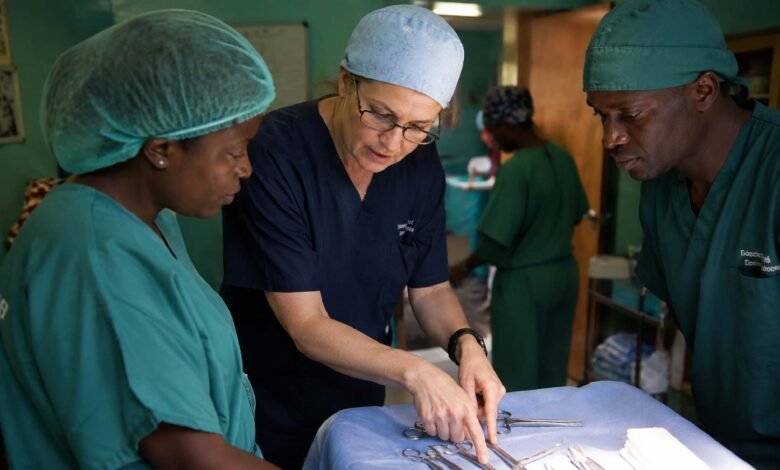
Global medical missions often begin with good intentions, skilled professionals, and valuable medical resources. But Dr. Barbara L Robinson represents the kind of specialized medical expertise that can make a difference only when paired with strong local knowledge and leadership. The most successful missions understand that visiting professionals should support local health workers rather than take control of the healthcare system.
Expertise Is Valuable, but It Is Not the Whole Answer
Foreign medical professionals can bring skills that may be difficult to access in some communities. They may have experience with complex procedures, specialized equipment, advanced diagnostics, or particular medical conditions. Their knowledge can be especially useful when local teams are given opportunities to learn, participate, and apply those skills after the visiting team leaves.
However, expertise alone cannot tell an outside medical team what a community actually needs. Health professionals who work in the area know the language, the culture, the available resources, the most common health concerns, and the practical problems that patients face. Without their input, even a technically excellent mission can spend time and money addressing problems that are not the community’s highest priorities.
Now it’s important to know the difference between helping and taking over. A visiting surgeon might know how to perform a complicated procedure, but a local healthcare team knows how that operation fits into the local healthcare system. Good missions use both types of knowledge instead of assuming that foreign information is more important.
A Mission Should Leave Skills Behind
One of the clearest measures of a successful medical mission is what remains after the visiting team goes home. If the only lasting result is a group of patients who received treatment during a short visit, the impact may be limited. If local professionals gain new knowledge, skills, confidence, and systems that continue to benefit patients, the mission has a much longer reach.
Training can take many forms. Visiting specialists can work alongside local doctors during procedures, explain their decision-making, demonstrate techniques, review cases, and provide practical teaching. Nurses, technicians, and other healthcare workers can also benefit from education that strengthens the entire care team rather than focusing only on physicians.
This approach changes the role of the foreign expert. Instead of being the person who arrives to solve every problem, the visiting professional becomes a teacher, collaborator, and resource. The local team remains at the center, which makes it more likely that knowledge will continue to be used long after the mission has ended.
Follow-Up Can Matter More Than the Mission Itself
Medical treatment does not end when a procedure is completed. Dr. Barbara L Robinson explains that patients may need medication, wound care, rehabilitation, additional testing, or another operation. Without a reliable follow-up system, an intervention that appears successful at the end of a mission can become much more complicated afterward.
Follow-up is only possible with the help of local healthcare workers. They are the ones who are still there for patients when they have problems weeks or months later. They can keep an eye on the patient’s progress, spot problems, and decide when the patient needs to be sent somewhere else.
This is one reason why leaders from the area should be involved before the task starts. The visiting team should know who will be giving ongoing care and what resources are out there. If you plan for follow-up, the goal won’t just be a one-time thing that has nothing to do with the patient’s long-term care.
The Best Missions Listen Before They Act
It can be tempting for medical teams with advanced expertise to arrive with a predetermined plan. They may have particular procedures they want to perform, equipment they want to use, or treatments they believe will have the greatest impact. But a successful mission begins by listening to the people who understand the local situation.
Listening can reveal priorities that are not obvious to outsiders. Perhaps a hospital needs training more than equipment. Perhaps staff need help establishing a reliable referral system rather than another short-term clinic. In another setting, the greatest need may be basic supplies, emergency care training, or support for patients who struggle to reach hospitals. This does not diminish the value of foreign expertise. Instead, it makes that expertise more useful. When specialists first understand the local situation, they can apply their knowledge where it has the greatest practical value.
Partnerships Create Stronger Missions
A medical mission should not operate like a temporary island. Hospitals, government health departments, universities, nonprofit organizations, community groups, and local medical professionals can all contribute to a stronger program. Each partner brings knowledge or resources that can fill gaps another organization cannot address alone.
Strong partnerships also encourage accountability. Local leaders can help visiting organizations understand whether their approach is actually producing useful results. They can ask difficult questions about patient selection, costs, training, equipment, follow-up, and sustainability.
The goal should be a relationship rather than a one-time transaction. When international specialists and local healthcare professionals work together over time, trust develops, and programs can evolve based on actual experience. This makes it easier to move from short-term medical assistance toward long-term health system improvement.
Technology and Equipment Need Local Support
Medical missions sometimes focus heavily on bringing sophisticated equipment into areas with limited resources. Modern technology can certainly improve diagnosis and treatment, but equipment alone does not create a functioning healthcare service. Someone must know how to operate, maintain, repair, and obtain the necessary supplies for it.
Local leaders can help determine whether proposed technology is appropriate for the setting. A machine that requires expensive parts or specialist technicians may become useless if those resources are unavailable locally. A simpler piece of equipment that local staff can maintain may provide greater long-term value.
The same principle applies to surgical supplies and medications. Before bringing resources into a community, mission organizers should understand what can realistically be replenished after they leave. Sustainability requires planning for what happens on the day after the foreign team departs.
Respect Builds Trust With Patients
Patients are more likely to participate in healthcare when they trust the people providing it. Foreign medical teams may face language differences, cultural differences, unfamiliar customs, and different expectations about medical treatment. Local healthcare workers can help bridge those gaps.
Respect means more than using a translator. It means listening to patients, explaining procedures clearly, respecting their decisions, and recognizing that local communities have their own knowledge and values. Patients should not feel like passive recipients of charity or temporary subjects of an outside medical project.
Local leadership can help establish this trust because local professionals understand how their communities communicate and make healthcare decisions. They can also help visiting teams recognize when an approach needs adjustment. That relationship can make the difference between a mission that is welcomed and one that unintentionally creates distance.
Specialized Surgeons Can Become Powerful Teachers
For highly specialized professionals, a medical mission can provide an opportunity to share knowledge in ways that extend beyond individual operations. A surgeon experienced in complex cardiac or thoracic procedures, for example, can work with local teams to improve clinical decision-making, technical skills, patient selection, and postoperative care.
This is where Dr. Barbara Robinson Cardiothoracic Surgery can serve as a useful example of the broader principle that specialized expertise has greater value when it is shared. The purpose of bringing advanced knowledge to a new setting should not simply be to demonstrate what an outside specialist can do. It should be to help local professionals strengthen what they can do themselves.
Teaching also benefits from humility. Experienced specialists may have valuable knowledge, but local professionals have equally important knowledge about their patients and healthcare environment. The strongest educational relationships work in both directions, with each side learning from the other.
Conclusion
Global medical missions are most effective when foreign expertise strengthens rather than replaces local leadership. Skilled specialists can provide advanced treatment, training, equipment, and valuable knowledge, but local professionals understand the people, systems, and challenges that determine whether those contributions will last. When missions are built around partnership, training, follow-up, respect, and local decision-making, they have a better chance of creating healthcare improvements that continue long after the visiting team has gone home.
For More Information Visit: Rare Magazine