How Building Material Vendors Accelerate Subcontractor Price Quotes
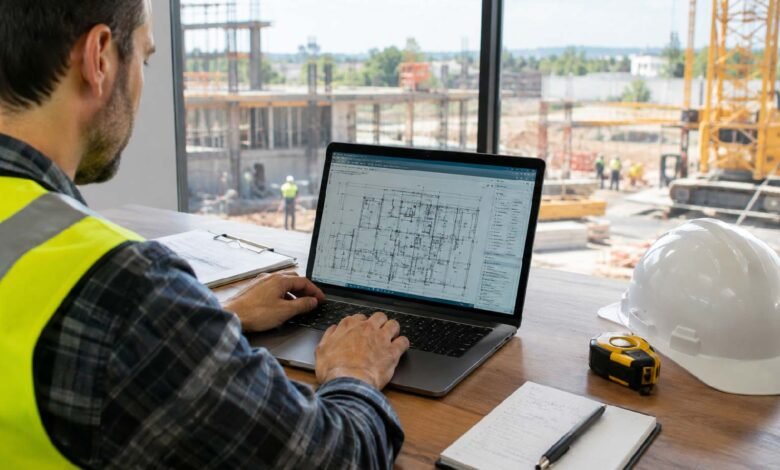
For building material suppliers, responding to a subcontractor quote request is often a race against the clock.
A subcontractor may send over a plan set and ask for pricing on multiple trades simultaneously. The supplier then has to figure out what is actually required, measure the relevant quantities, apply the right product assumptions, and turn those quantities into a quote.
The challenge is not simply getting the numbers right. It is getting them right quickly enough to win the order. That is where a reliable supplier takeoff process can make a difference.
The quote often starts with someone else’s drawings
Material vendors do not always receive a neatly packaged list of quantities. More often, they receive architectural drawings, specifications, addenda, and a short email asking for a price. The subcontractor may know exactly what they need, but the supplier still has to translate the drawings into material quantities.
That means the first job is understanding the scope.
A drywall supplier, for example, may need to distinguish between different wall types, board thicknesses, ceiling systems, shaft walls, and moisture-resistant applications. A lumber supplier may need to identify framing members, sheathing, blocking, and other material requirements.
The more complicated the project, the more time can disappear into this first stage.
Quantity matters, but so does product selection
A material quote is not complete just because the estimator has measured the drawings.
The supplier also needs to determine what products correspond to those quantities.
Two projects with the same square footage can require very different material packages. Specifications may call for a particular grade, thickness, manufacturer, finish, or performance characteristic. The supplier needs to account for those requirements before pricing the takeoff.
This is one reason supplier estimating is different from simply measuring drawings. The quantity has to connect to a product that can actually be ordered and supplied.
Manual takeoffs create a capacity problem
For many suppliers, the problem is not that their estimators cannot perform takeoffs. It is that there are only so many hours in the day.
A team might receive several quote requests at once, each with dozens or hundreds of plan pages. Some will become orders. Others will not. The estimating team still has to spend time reviewing and measuring each opportunity.
That creates a difficult tradeoff. Respond too slowly, and the subcontractor may already have pricing from another supplier. Rush the takeoff and the risk of missed quantities or scope grows.
A material supplier takeoff workflow that reduces repetitive measurement can help relieve that pressure without lowering the level of review required before a quote goes out.
AI can handle some of the repetitive work
This is where AI takeoff technology is becoming relevant to material vendors.
Instead of manually measuring every relevant area, suppliers can use software to identify and quantify certain elements directly from drawings. Suppliers can then review, adjust, and use the resulting quantities as the foundation for a material quote.
The practical benefit is speed.
An estimator who spends less time tracing walls or counting repeated components has more time to investigate specifications, check unusual conditions, validate quantities, and work through pricing.
The technology does not eliminate the need for an experienced estimator. In many cases, it simply moves that person further up the value chain. Our guide on AI takeoff software dives into how AI-powered takeoffs can support the different business needs of contractors, subs, and suppliers.
Faster quotes can become a sales advantage
For a subcontractor, getting a material quote quickly has real value.
They may be working against a bid deadline and waiting on several suppliers before they can finalize their number. A supplier who can turn around an accurate quote while competitors are still working through the plans has a better chance of becoming part of that bid.
Speed can also improve the supplier’s relationship with repeat customers.
If a subcontractor knows that a particular vendor consistently responds quickly and provides usable quantities and pricing, that vendor becomes easier to work with. Over time, responsiveness can become part of the supplier’s competitive advantage.
Standardize the parts that do not need to be reinvented
Not every project needs a completely new estimating process.
Suppliers often work with familiar products and recurring assemblies. A roofing distributor may repeatedly price similar roof systems. A drywall supplier may see the same board types and framing configurations across commercial projects.
Creating consistent workflows around these recurring requirements can reduce unnecessary work.
The estimator can spend less time figuring out how to structure every new quote and more time on project-specific questions that require judgment.
Addenda are another opportunity to save time
Quote requests rarely stay static.
Drawings change. Specifications get revised. A subcontractor sends an updated plan and asks the supplier to “check the new quantities.” If the estimator has to repeat the entire takeoff manually, a small revision can consume a surprising amount of time.
Digital workflows can make this easier by helping teams compare versions and focus attention on changed areas.
That matters because quote accuracy is not just about getting the original takeoff right. It is also about making sure the final quote reflects the latest information.
The best supplier takeoff process connects quantity to quote
A takeoff is only one part of the supplier’s job.
The useful output is not a measurement sitting in a spreadsheet. It is a quantity tied to the correct material, priced appropriately, reviewed, and delivered back to the subcontractor in a form they can use.
That is where a well-designed estimating workflow can have an impact beyond the estimating department.
Faster takeoffs can mean faster quotes. Faster quotes can mean more opportunities handled by the same team. Better-organized quantities can also make it easier to move from a quote request to an actual material order.
For building material vendors, that is ultimately the opportunity with AI-assisted takeoffs. The value is not simply measuring drawings faster. It is creating enough capacity to respond to more subcontractors, more consistently, without making the estimating team work longer hours.
For More Information Visit: Rare Magazine