How to plan a multi-country trip across Europe in 2026

Planning a multi-country Europe trip in 2026 requires a strategic approach to ensure a seamless and unforgettable experience. Whether you are dreaming of a whirlwind tour through historic capitals or a slow-paced journey across scenic landscapes, success lies in the details. You can avoid common travel pitfalls by:
- Defining your budget early
- Selecting logically connected destinations
- Staying ahead of booking timelines
This guide covers the essential steps to build a balanced itinerary, ensuring a manageable and rewarding European adventure.
How do you determine the ideal length and budget for your European adventure?
A successful journey requires a realistic timeframe and a clear financial plan. For a first-time multi-country Europe trip, travel experts often recommend a sweet spot of 10 to 14 days. This duration comfortably allows you to explore two to three countries at a relaxed pace, prioritizing depth over breadth.
If you have the luxury of a longer trip lasting three to six weeks, you can reasonably expand your itinerary to include three to six countries. However, even with more time, it is crucial to avoid the temptation to see everywhere at once. Slower stays and weekly bases will help you absorb the local culture without succumbing to exhaustion.
Your daily budget will fluctuate significantly depending on your chosen regions. In 2026, a practical budget for Western and Northern Europe ranges from €75 to €100 per day for a mid-range experience, which covers central accommodation, local transit, food, and basic sightseeing. Conversely, Central and Eastern Europe offer excellent value, with daily costs averaging between €40 and €60 for a similar level of comfort.
When building your overall budget, remember to account for major transport costs, nightly accommodation rates, and attraction entrance fees. Additionally, you must factor in hidden costs such as:
- City taxes
- Luggage fees on regional flights
- Transfers between airports and city centers

Which countries should you choose to create a logical travel route?
Selecting the right combination of countries is vital for maximizing your time and minimizing transit fatigue. The golden rule for route planning is to prioritize countries that share a physical border or are connected by a direct two- to four-hour transport link. Designing your itinerary in a logical shape—such as a straight line, a circle, or a triangle—prevents inefficient zig-zag routes that waste valuable vacation hours.
For example, a popular 10-day Western Europe loop might seamlessly connect London, Paris, Amsterdam, and Brussels via high-speed rail. Alternatively, an Iberian line could take you from Lisbon through Seville and Madrid, ending in Barcelona.
When structuring your daily plans, group attractions geographically. Clustering your daily sightseeing within the same neighborhood or region cuts down on cross-town transit and maximizes your actual experience time. If you are planning a trip of 30 days or more, consider adopting a base city strategy. Staying in one major city for about a week allows you to take convenient one- or two-day excursions to nearby towns or rural areas without the burden of constant packing and unpacking.
What are the best transportation methods for traveling between European countries?
Europe boasts an incredibly diverse and efficient transportation network, allowing you to tailor your transit methods to your specific route and budget. Trains remain the quintessential European travel experience, offering fast, scenic, and highly convenient city-center to city-center connections. For moderate distances, high-speed rail is often the most efficient choice.
For extensive rail travel, compare comprehensive rail passes against individual point-to-point tickets based on your 2026 itinerary and flexibility needs. While overnight trains can save you the cost of a hotel room, they should be used sparingly to prevent sleep deprivation.
For longer cross-continental segments where rail travel would consume an entire day, regional flights are highly practical. Booking open-jaw flights—flying into your starting city and departing from your final destination—is a brilliant strategy to eliminate the time and expense of backtracking. If you are traveling on a strict budget, intercity coaches provide a highly cost-effective alternative, though you must be willing to accept longer travel times. Reserve car hires for rural or coastal routes with sparse public transport, as driving in dense European cities is highly stressful.
When should you book your flights, accommodations, and major attractions?
Booking early locks in favorable prices and ensures availability during peak seasons. For a 2026 European adventure, you should aim to book your long-distance flights approximately three to six months before your departure date. This window generally offers the best balance of flight options and competitive pricing.
High-demand accommodations, particularly in major capitals or coastal areas during the peak summer months, should be secured four to six months in advance. Choosing centrally located lodging is a smart strategy to reduce daily commuting times and keep you close to the action.
While it is wise to lock in your first and last nights, long-distance transit, and highly popular attractions weeks or even months ahead of time, you must also leave room for spontaneity. Major landmarks like the Vatican Museums or the Eiffel Tower require advance reservations, but over-scheduling every hour of your trip is a recipe for disaster. Experienced travelers emphasize the importance of leaving some days entirely flexible. A well-structured itinerary balances pre-booked anchors with free time to:
- Wander neighborhoods
- Relax in local cafes
- Adapt to unexpected discoveries
What legal documents and entry requirements are mandatory for 2026?
International travel requires early preparation of legal formalities to avoid last-minute panic. The most significant update for 2026 travel is the implementation of the ETIAS authorization for visa-exempt travelers entering the Schengen Area. This mandatory digital authorization involves a small fee of approximately €7 and remains valid for three years, streamlining border control for short-term visitors.
You must apply for this authorization well before your departure date to ensure a smooth arrival. Furthermore, it is essential to have a solid understanding of Schengen rules, particularly the 90/180-day rule, to legally structure your country sequence and overall trip length.
Beyond the new ETIAS requirements, traditional documentation remains just as critical. You must verify that your passport is valid for at least six months beyond the final date of your multi-country itinerary. If your route includes non-Schengen states, such as the United Kingdom or certain Balkan countries, you must check their specific entry rules and any potential transit visa requirements separately.
Finally, securing comprehensive travel insurance is non-negotiable. A robust policy covering medical care, trip interruptions, and delays provides essential peace of mind.
How can you manage your daily itinerary to avoid travel burnout?
Travel burnout is a very real risk on multi-country trips, often caused by overly aggressive scheduling and constant movement. Pace management is essential to maintain your energy and enthusiasm. A widely accepted recommendation is to spend a minimum of three nights in each city, though extending this to five nights allows you to truly feel settled and absorb the local atmosphere.
You must recognize that each border crossing consumes a significant portion of your day in transit, hotel check-ins, and general adjustment. By limiting the number of times you change locations, you prioritize meaningful cultural depth over simply ticking boxes on a map.
A well-designed itinerary actively balances intensive sightseeing days with lighter transit or rest days. For every ten to fourteen days of travel, schedule at least one completely free day with no major travel or big-ticket sights. This dedicated downtime is crucial for recharging.
Additionally, be mindful of daily logistics such as typical closure days for major attractions. Since many European museums close on Mondays or Tuesdays, check schedules in advance to plan alternative activities like park visits.
How do you stay connected and navigate easily across multiple borders?
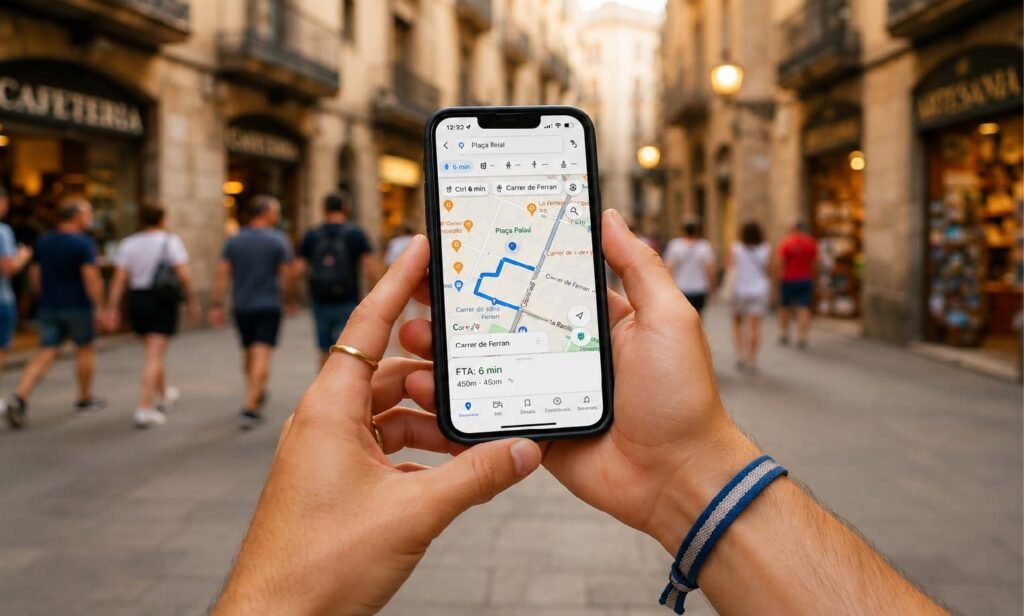
Maintaining reliable internet access is no longer a luxury but a fundamental necessity for navigating modern European travel. From accessing digital train tickets and pulling up offline maps to translating local menus and checking attraction opening hours, your smartphone is your most vital travel tool. Relying on public Wi-Fi can be frustrating and insecure, while traditional international roaming charges from your home provider can quickly devour your travel budget.
Modern solutions like Amigo eSIM allow travelers to get online instantly, leveraging their global coverage to ensure a seamless connection without the hassle of physical SIM cards. By preparing your digital connectivity strategy in advance, you can step off the plane and immediately begin navigating your new surroundings with confidence.
What are the benefits of a regional data plan for European travel?
When your itinerary spans several neighboring nations, a regional connectivity solution offers unparalleled convenience and savings. Purchasing an eSIM for Europe allows you to cross borders from France to Germany to Italy without ever losing your signal or needing to swap out tiny pieces of plastic. These data plans are specifically designed to automatically connect to the strongest local networks in multiple European countries, providing a seamless experience that mirrors how you use your phone at home.
This instant digital activation means you can avoid the long queues at airport telecom kiosks and instead focus entirely on enjoying your adventure. Regional plans are more cost-effective than daily roaming fees, leaving more budget for authentic local experiences.
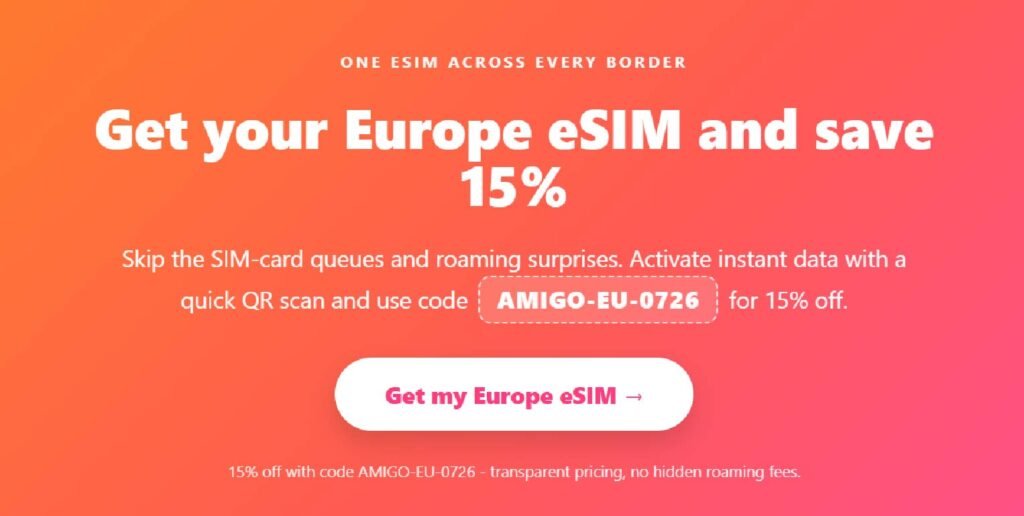
Travelling across several countries this year? You can save 15% on your Amigo eSIM for Europe with the code AMIGO-EU-0726 at checkout — one regional plan that works across every border, for less.
Why might a global data solution be better for extended or frequent travelers?
If your 2026 travel plans extend beyond the borders of Europe, or if you are a digital nomad who frequently hops between continents, a broader connectivity strategy is highly advantageous. Opting for an international eSIM card provides the ultimate flexibility for global exploration. These comprehensive data solutions allow you to maintain affordable and reliable mobile connectivity across hundreds of countries under a single, easily manageable digital profile.
This eliminates researching, purchasing, and activating new local data plans upon landing. With diverse regional and global data plans available for instant top-up via dedicated applications, extended travelers can enjoy uninterrupted access to essential navigation, communication, and work tools, no matter where their multi-country journey takes them.
For More Information Visit: Rare Magazine