Remote Desktop Solution Deployment: On-Premises vs Cloud Models
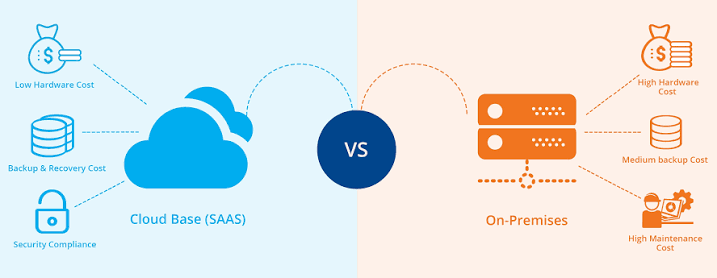
How you decide to deploy a remote desktop solution is the first choice that influences everything else, from initial costs to future flexibility to accountability for keeping the system operational. While assessing remote desktop platforms, organizations must ultimately choose whether to manage the infrastructure themselves or use a cloud-enabled service provider that manages the underlying systems for them. No one method is definitively better than the other, with the appropriate selection contingent largely on an organization’s technical infrastructure and operational needs.
This guide explains how to tell whether your organization should use on-premises or cloud deployment models for remote desktop solutions, as well the practical implications that decision will have.
What On-Premises Deployment Actually Involves
In on-premises deployment, the remote desktop infrastructure is hosted by an organization in servers which are generally housed within a facility that the company owns or directly manages. The organization owns the hardware, operates that software installation and updates, and controls the networking configuration which successfully routes external connections to those internal systems.
Remote desktop solutions deployment guide decisions involving on-premises infrastructure require a meaningful upfront investment in server hardware and networking equipment, along with the IT expertise needed to configure and maintain it properly. For organizations following this route, essentially building and operating their own infrastructure piece, it promises a steep power climb with that responsibility being coupled with immense control.
The fundamental building blocks of on-premises remote desktop infrastructure are the servers themselves, which handle the processing and session management that remote users connect to. A solid grounding in client-server architecture basics, including how servers process requests from connecting clients, helps clarify what an organization is actually responsible for managing when it chooses to host this infrastructure internally rather than relying on a third party.
What Cloud Deployment Actually Involves
This involves transferring the onus of maintaining an IT infrastructure to a third-party service provider who runs and manages whatever remote desktop platform you choose to deploy on their own servers, providing access to your organization’s users over the internet. Instead of a large upfront capital commitment, the organization typically just pays to subscribe and the provider maintains hardware, applies software updates and scales the underlying infrastructure.
The broader shift toward cloud computing origins traces back further than most people realize, with the underlying concept of remotely located users connecting to centralized computing resources predating the modern cloud computing terminology by decades. What has changed is the scale, reliability, and accessibility of that model, which has made cloud-based remote desktop deployment a practical option for organizations of nearly any size rather than something only feasible for large enterprises with dedicated infrastructure budgets.
Comparing Upfront and Ongoing Costs
The cost structure for these two deployment models is significantly different. In the on-premises world, huge up-front capital expenditures (capex) are needed for servers, networking gear and even physical space / power infrastructure required to support them. You pay for that in a larger and larger upfront cost, which is offset over time as you have no ongoing subscription costs, but organizations are still responsible for maintenance, replacing the hardware at some point down the road and then dedicating IT staff time to keep it all running.
With cloud deployment, much of that capital expense is turned into an ongoing operational expense that appears to be paid by subscription basis on user count or usage. Since organizations do not have to make a large upfront investment before starting to use the platform, this lowers the barrier to entry significantly. In the long run, much of the total cost comparison between on-premises vs. cloud resources depends largely on usage patterns, scale and operational efficiency in running on-prem capacity relative to what a specific cloud provider charges for equivalent capacity.
Control, Customization, and Compliance Considerations
Because of this usually, on-premises deployment provides more direct control over how the system is configured, where data physically resides and what type of security measure provide at ground level. Some organizations are subject to enforcement of strict regulatory requirements and laws that dictate how data should be resident or handled, so this control can also tip the scales based on a need for absolute clarity around where is the data stored / processed.
In cloud deployments you are giving up some of that direct control in exchange for the operational simplicity of using a vendor’s existing infrastructure and security controls. While reputable cloud providers typically have security certifications and compliance documentation that can meet many regulatory requirements, companies must still validate that a specific provider’s practices are in line with their individual compliance obligations instead of just assuming all cloud provides equally map to compliance coverage.
Scalability and Flexibility Differences
Cloud deployment provides inherent elasticity to scale in or out in response to variations in user volume, whether seasonally, through growth and consolidation activities. In a silver lining way, it is now far easier to add / remove or scale up/down the number of user licences in cloud-based subscription model given that this process can generally be performed at relatively little notice and without further infrastructure investment.
In the case of on-premises, it’s a lot more intentional with capacity planning because anytime you’re scaling up beyond what you have available on hardware-wise, that implies needing additional infrastructure to procure and stand up requiring time and capital. For example, this might not be as limiting for organizations with constant stable user counts than those experiencing rapid growth or significant seasonal variation in remote access needs.
Maintenance Responsibility and IT Overhead
One of the more practical differences between the two models is how maintenance responsibility is divided. With on-premises deployment, the entire burden of patching, directly updating, troubleshooting and maintaining the underlying infrastructure falls entirely to an organization’s own IT team. It takes significant technical know-how and a regular commitment of time that some companies are able to manage, while others truly struggle.
With cloud deployment, the majority of that maintenance effort is borne by the provider, who is responsible for keeping the underlying platform upgraded, patched and running. While this frees up internal IT resources to work on other priorities, it also means that the organization is reliant on the provider’s maintenance and incident response timelines instead of controlling that timeline itself.
How to Pick the Right Model for Your Agency
Enterprise users with on-prem data center infrastructure already in place, stringent regulatory mandates around data residency, or experienced IT staff to run more infrastructure will find an on-prem deployment well suited for integration — especially if they have existing systems running on similar architecture. For example, the marginal cost of adding remote desktop infrastructure to an existing on-premises environment is usually less than it would be to build that capability from scratch.
Cloud deployment is a better fit for organizations that do not have existing infrastructure investments, which require quick time-to-market and operational simplicity, or whose user count varies widely. Cloud deployment is especially appealing to companies that want to avoid the complexity of managing infrastructure that doesn’t directly contribute to their mission, since there is a lower upfront cost and less hands-on care of hardware.
Several organizations take a hybrid approach, leaving some systems in-house due to compliance or bandwidth requirements and using cloud to meet the majority of their remote access needs. This paints an incomplete picture — not every system in an organization is suitable for cloud (and not every infrastructure has to be all-or-nothing on-premises and cloud).
Frequently Asked Questions
Can an organization switch from on-premises to cloud deployment later, or is the decision permanent?
While switching is mostly doable, it takes some planning because moving user data, configurations and access policies between deployment models can take time to execute carefully. If your organization thinks you may switch in the future, then before investing in a platform it is worth considering how portable data & configurations are within that platform as some platforms like Confluence have standardized export format and migration tooling which makes switching much easier.
Does that mean cloud deployment is less secure than on-premises deployment?
Not inherently. Security is based not on whether the deployment model is in the cloud or on-premises but rather how tightly the provider implements and follows those practices, and how well the organization manages configurations relating to access control. While on-premises deployment allows organizations direct visibility and control if if properly managed by an organization, reputable cloud providers often have more resources fenced for security than a typical organization could invest in on-prem infrastructure.
How do organizations estimate total cost of ownership when comparing the two models?
A like-for-like comparison should compare the one-off hardware and implmentation costs for on-premises deployment against the total subscription costs of cloud deployment over an equivalent multi-year period. It should also include the time spent by IT personnel on maintaining any required infrastructure, the cost of replacing this hardware in due course, and any operational overhead benefits that cloud deployment provides. Cloud deployment wins a short-term cost comparison while longer time horizons can reverse the calculation depending on the organization’s specific, often-declining infrastructure efficiency and usage patterns.