THE EVOLUTION OF WEDDING MUSIC TRENDS OVER THE DECADES
Music has been an integral part of wedding ceremonies for centuries, serving as a soundtrack to one of life’s most significant milestones. From classical tunes of bygone eras to contemporary hits, wedding music trends have evolved alongside societal changes and musical innovations. The choices couples make for their special day often reflect broader cultural shifts, technological advancements, and personal tastes. As we delve into the rich history of wedding music, we’ll explore how each decade has left its mark on what has become the quintessential auditory expression of love and celebration.
THE SWINGING 60S: ROCK AND ROLL LOVE ANTHEMS
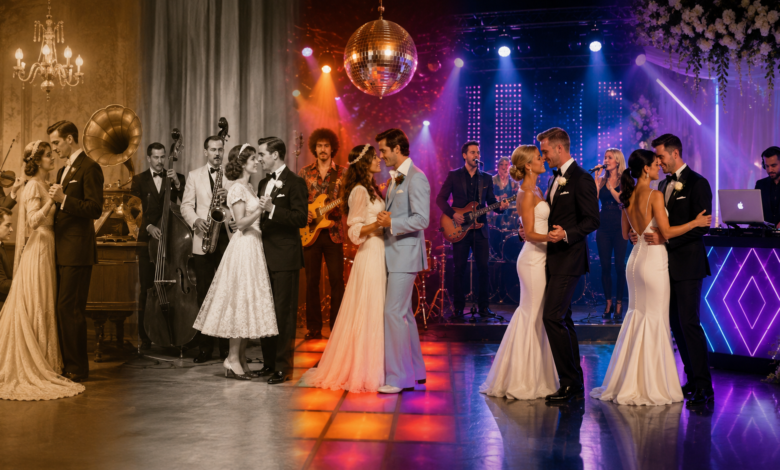
The 1960s were a transformative period for music and culture. As the Baby Boomer generation came of age, they brought with them a spirit of rebellion and innovation that was mirrored in their wedding music choices. The traditional classical and jazz standards began to share center stage with the rise of rock and roll. Couples danced to the vibrant sounds of The Beatles, The Beach Boys, and Motown greats, celebrating their love with a soundtrack that resonated with the youth culture of the time. Love anthems like “Can’t Help Falling in Love” by Elvis Presley became iconic wedding songs, setting the tone for a more contemporary and personalized approach to nuptial music
The decade was defined by its bold sound and the way it allowed couples to express their individuality. Wedding bands frequently included rock-influenced ensembles, blending traditional orchestral instruments with electric guitars and drum kits. This era marked the beginning of a shift that would allow for greater diversity in the soundscapes of weddings, paving the way for future decades where personal musical taste would be at the forefront of wedding planning.
DISCO FEVER: THE 70S EXPLOSION
The 1970s brought with it the rise of disco, a genre characterized by its pulsating beat and danceable rhythms. Disco’s popularity quickly found its way into wedding receptions, where couples sought to create lively and spirited celebrations. Artists like The Bee Gees, Donna Summer, and Earth, Wind & Fire dominated the playlists, with tracks like “Stayin’ Alive” and “September” becoming dance floor staples.
This decade saw a burgeoning interest in personalized wedding experiences, as couples embraced the freedom to design their day around their musical preferences. The traditional wedding band setup began to include elements like DJs and dance floors adorned with colorful lights, turning wedding receptions into dazzling dance parties. It was a time when wedding bands london adapted to the vibrant new trends, bringing fresh energy to live performances at receptions. This personalization and focus on guest enjoyment would continue to influence wedding music trends in the following decades.
THE POWER BALLADS OF THE 80S
The 1980s was the decade of excess and flamboyance, both in fashion and music. Power ballads, with their emotional melodies and soaring vocals, became the defining anthems for many weddings during this period. Couples often chose hits by iconic artists such as Whitney Houston, Journey, and Bon Jovi to underscore the emotional heart of their ceremonies and receptions. These power ballads embodied the intense romantic sentiment that many desired to express on their wedding day.
Wedding venues echoed with the sound of synthesizers and electric guitars, as live bands and mobile DJs incorporated the popular electronic elements of the time. This was a period when wedding entertainment started featuring themed elements like fog machines and elaborate lighting setups, creating an immersive atmosphere that enhanced the overall experience for guests. The boldness of 80s music allowed couples to make a grand statement, setting a precedent for the dramatic flair seen in modern weddings.
THE RENAISSANCE OF ALTERNATIVE IN THE 90S
As the 1990s rolled in, wedding music trends took on yet another transformation. The grunge and alternative movements introduced a more raw and authentic sound to the musical landscape, and this was reflected in couples’ choices for their wedding day. Bands like Nirvana, Pearl Jam, and Radiohead provided a counterpoint to the more polished pop offerings, giving couples the option to infuse a bit of edge into their special day.
Some couples preferred the soft rock and pop ballads that continued to offer timeless melodies and heartfelt lyrics. Artists such as Shania Twain and Celine Dion delivered tracks that resonated with love and commitment, becoming go-to choices for wedding ceremonies and first dances. With more options available than ever before, couples were able to customize their playlist to truly reflect their personalities. The 90s set the stage for the eclectic mix of genres that would characterize the wedding music of the new millennium, as identity and individuality became central to wedding planning.
THE DIGITAL AGE: 2000S AND STREAMING REVOLUTION
The turn of the millennium was marked by significant technological advancements, including the rise of digital music and streaming services. This opened up a world of possibilities for couples planning their weddings, allowing easy access to vast libraries of songs from various genres and eras. Wedding music during the 2000s was characterized by its diversity, with a mix of pop, R&B, hip-hop, and traditional ballads creating a more personalized soundtrack for every occasion.
Digital playlists became a popular choice for modern weddings, with couples curating their own unique music collections to be played throughout the day. The presence of DJs often complemented live bands, blending live instrumentals with recorded favorites. This blend of old and new highlighted the versatility and innovation of wedding bands london, adapting to the changing demands of music-savvy couples. The digital age transformed the way music was accessed and shared, ensuring that no matter one’s taste, there was always a perfect song for every moment of a wedding day.
THE CURRENT ERA: A FUSION OF SOUNDS
Today, wedding music trends are more diverse than ever, influenced by a global array of sounds and styles. Couples are increasingly choosing to incorporate a mix of genres that best represent their love story. Playlist diversity can range from classical arrangements for the ceremony to upbeat pop, hip-hop, and even EDM for the reception. Cultural influences play a significant role, with destination weddings and multicultural events showcasing traditional tunes alongside modern hits.
In this era, wedding music has become an essential component of storytelling on the big day. Music platforms and social media have further expanded the options available, enabling couples to discover emerging artists and unique covers that speak to their personal style. Whether opting for a nostalgic throwback or cutting-edge releases, the soundtrack of today’s weddings is as varied and personalized as the couples themselves.
THE IMPORTANCE OF LIVE MUSIC
While digital music options have become ubiquitous, live music continues to hold a cherished place in weddings. The real-time interaction, authenticity, and ambiance created by live performances are unparalleled. Live bands, whether playing timeless classics or contemporary hits, bring a dynamic energy that recorded music simply cannot replicate. The personal connection and joy expressions between the band and the audience can transform a reception into an unforgettable experience.
For couples who desire a fusion of the best of both worlds, having both a live band and a DJ is a popular option. This approach allows for the vibrant energy of live performances, complemented by the vast musical libraries available in digital format. The adaptability and skill of wedding bands are crucial as they adjust to diverse musical requests, ensuring the entertainment is perfectly in tune with the couple’s vision.
DJ VS. BAND: THE MODERN DEBATE
Choosing between a DJ and a live band remains one of the most important decisions couples face when planning their wedding music. Each option offers distinct advantages that cater to different preferences and atmospheres. DJs are often favored for their wide-ranging music libraries, flexibility with song requests, and ability to keep the dance floor packed with seamless transitions. They can provide a high-energy entertainment experience, often incorporating lights and special effects into their sets.
Conversely, a live band offers an immersive experience with talented musicians and vocalists who can evoke emotions and bring the chosen music to life. Their ability to read the room and interact with guests adds a personal touch that many find invaluable. When it comes to making this decision, it ultimately boils down to the desired atmosphere. Some choose a hybrid approach, using a DJ for certain parts of the celebration and a band for others, maximizing the strengths of both options to create a unique and engaging event.
CONCLUSION: THE ENDURING IMPORTANCE OF WEDDING MUSIC
As wedding music trends have evolved over the decades, one thing has remained unchanged: the power of music to evoke emotion and create lasting memories. Whether a couple leans toward a time-honored classic, an indie favorite, or a chart-topping hit, the music they choose reflects their journey and shared dreams. It is an integral part of the atmosphere, capable of transforming moments into lifelong memories.
In recognizing the evolution of wedding music, we also honor the rich tapestry of cultural influences, technological advancements, and personal choices that shape each wedding day. As future decades unfold, one can only imagine how wedding music will continue to evolve, but one certainty remains—music will always be an irreplaceable part of the celebration of love and unity.