Why Is Wire Thickness Important In Replacement Power Cords?
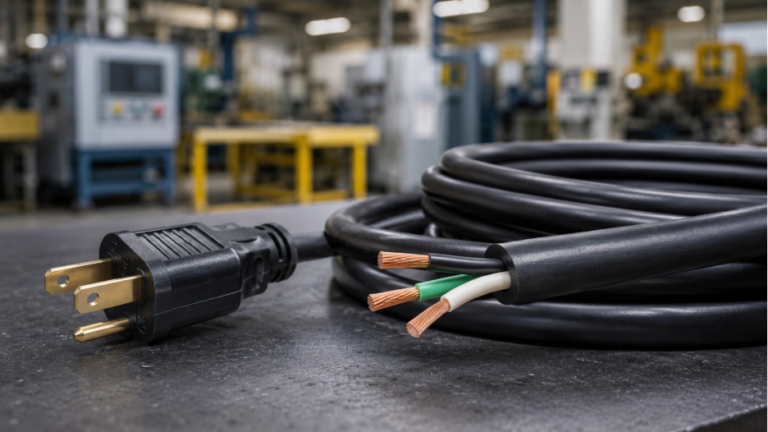
A replacement power cord might seem like a minor accessory, but selecting the wrong one can introduce irritating performance problems. The equipment can operate inefficiently, cords can get hot when operating, or power delivery can be irregular when subjected to heavy loads. Consequently, even a small detail can have an impact on safety and reliability.
One of the most important factors to consider when replacing a power cord is wire thickness. It determines the amount of current that the cord is capable of carrying and the efficiency with which electricity gets to your equipment.
Thus, understanding the wire gauge can help you make a more informed choice when it comes to challenging commercial and industrial use cases.
Therefore, let’s explore why wire thickness matters and how it influences performance, durability, safety, and long-term value.
1. Wire Thickness Determines How Much Power Your Equipment Can Handle
Choosing a replacement power cord is about more than matching a plug style. It is the choice of a cord capable of bearing the electrical load of commercial equipment, industrial machines, and other high-power loads without diminishing performance.
As an example, a 12 gauge replacement power cord is commonly used in harsh conditions since it can accommodate more current and still deliver the power efficiently. As a result, the appropriate thickness of the wire permits the flow of electricity effectively and enables stable operation.
The thickness of wire is determined by the American Wire Gauge (AWG) system. Interestingly, the lower the gauge of the wire, the thicker it is. For example, a 12-gauge wire is thicker than a 14-gauge wire and can safely carry higher current loads.
This distinction is particularly significant when it comes to equipment that must be used on 20 Amp circuits. The larger the conductor, the higher its current-carrying capacity, and thus it can be used in heavy-duty applications where a reliable power supply is the key.
Instead of treating wire gauge as a technical specification, think of it as the foundation of reliable electrical performance.
2. Thicker Wires Reduce Heat Buildup and Improve safety
Resistance naturally occurs when electricity flows through a conductor. Nevertheless, thicker wires are less resistant as compared to thin ones. Consequently, they produce less heat with the same amount of electrical load.
This benefit is further enhanced when commercial appliances, manufacturing equipment, specialized tools, or OEM installations are operated over long durations and use power cords. Reduced resistance helps ensure consistent performance and reduces unnecessary stress on the electrical system.
Moreover, overheating may lead to insulation deterioration and shorten the total span of a power cord. A sturdy cord using the right wire thickness is structured to endure the harsh environment and provide reliable service.
Hence, the choice of an adequate gauge is not merely about the electrical requirements. It also helps to operate more safely and be more confident in everyday use.
3. Proper Wire Gauge Minimizes Voltage Drop and Supports Consistent Performance
The quality of power is as important as the availability of power. Voltage loss along the cable can decrease efficiency and performance even when equipment receives electricity.
Voltage drop is a natural occurrence when electricity passes through a conductor. Fortunately, heavier wires can reduce this effect by providing a lower electrical resistance. This results in increased power being delivered to the attached equipment rather than being wasted in transmission.
This advantage is especially significant when the replacement power cords are longer or when the machinery cannot operate properly without a constant voltage. Motors, industrial tools, and commercial equipment usually work better when they are fed with regular power.
Heavy-duty 12/3 gauge power cords are designed with this requirement in mind. Their construction enables consistent transfer of power over different lengths and assists in ensuring that operational efficiency is maintained.
Consequently, selecting the right thickness of the wire can help to achieve smoother working and minimize the disruptions that may occur because of uneven electrical supply.
4. Right Wire Thickness Improves Long-Term Reliability and Durability
A replacement power cord is an investment in the performance of your equipment. As such, having the right wire thickness will ensure the cord and the system it is attached to are safeguarded in the long run.
Heavy power cords are designed to withstand harsh environments with frequent use, movement, and constant electricity usage. These conditions are supported by a much heavier conductor, which is able to deliver high current demands as well as reliable power delivery.
Furthermore, numerous commercial and industrial uses depend on replacement cords that are well-constructed with durable insulation to endure daily wear and tear. These features, when combined with the appropriate wire gauge, form a solution that is meant to be used with long durability.
Instead of changing cords constantly because of overheating or insufficient capacity, investing in the appropriate thickness of wires makes it easier to increase reliability and reduces unnecessary downtime.
This is a pragmatic solution that is helpful to equipment manufacturers, industrial plants, and businesses that require daily reliability of electrical operation.
Conclusion
Wire thickness plays a critical role in the performance of any replacement power cord. It influences current capacity, heat generation, voltage stability, and overall durability, making it one of the most important specifications to consider before selecting a replacement.
For commercial and industrial applications that demand dependable power delivery, choosing a heavy-duty 12/3 gauge cord helps support safe and efficient operation.
By matching wire thickness to the electrical requirements of your equipment, you can improve reliability, extend the life of your power cord, and maintain consistent performance in even the most demanding environments.