Coffee Roaster Procurement in India: Building the Financial Case for In House Roasting

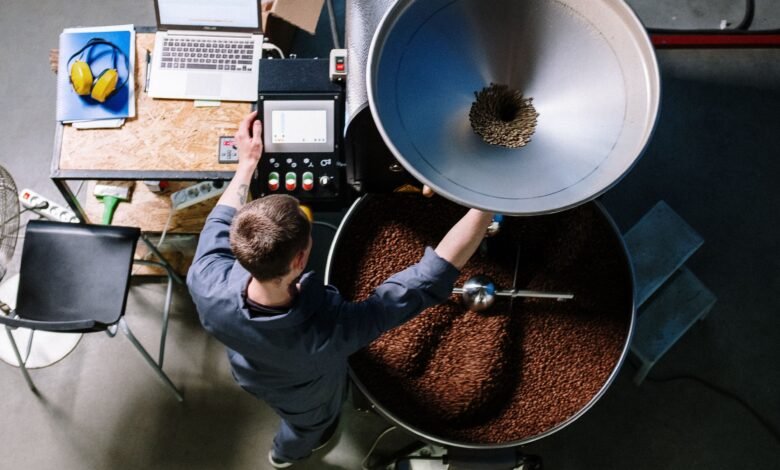
For food and beverage businesses operating in India’s expanding specialty coffee segment, the decision to procure a commercial coffee roaster represents one of the highest return capital investments available within the category. The financial case rests on a straightforward margin calculation: the difference between the cost of green coffee beans and the market price of finished roasted coffee is currently captured by a third party supplier for most Indian food and beverage operators. Internalising this margin through equipment ownership converts a recurring cost centre into a revenue generating asset, and the arithmetic justifying that conversion becomes compelling at surprisingly modest throughput volumes.
The Margin Economics of In House Roasting
Green coffee beans sourced from Indian estates or through established import channels are priced at a fraction of the equivalent finished roasted product. For a cafe or hospitality business processing three to five kilograms of roasted coffee per day, the annual cost differential between purchasing roasted coffee at market rates and roasting equivalent green bean volumes internally can represent a significant share of total beverage cost savings. The roasting process adds the margin that an external supplier currently captures. At higher processing volumes, the financial case strengthens further, and the payback period on commercial roaster acquisition compresses into a range that most business investment committees would consider straightforward to approve.
Modelling the Payback Period Before Capital Commitment
Procurement teams and finance directors evaluating coffee roaster investment should establish the payback period as the primary decision variable before any equipment specification work begins. The calculation requires three data inputs: current annual expenditure on roasted coffee procurement, the projected annual cost of sourcing equivalent green bean volumes, and the total acquisition and operating cost of the roaster including installation, energy consumption, and maintenance. The difference between current procurement spend and projected in house production cost, applied against total equipment outlay, produces a payback horizon that makes the capital case both transparent and defensible. Kaapi Machines’ coffee roaster machines range provides commercial specifications across multiple output capacities, enabling finance teams to match roaster throughput to actual business volume before capital commitment.
Operational Variables That Affect Financial Returns
In house roasting delivers financial returns that vary directly with operational consistency. Roast profile repeatability determines yield, waste rates, and product quality, each of which has a measurable impact on both revenue and margin. Inconsistent roasting generates batch rejection rates that erode projected cost savings and introduce a quality control liability that can affect customer retention. Consistent production enables the business to develop a proprietary roast profile that supports premium pricing, which adds a revenue dimension to the financial case that extends beyond cost saving alone. The operational competence of the team managing the roaster is therefore a variable that must be explicitly addressed within the original investment case.
Energy Consumption and Facility Cost as Operating Variables
Commercial coffee roasters carry meaningful energy consumption profiles that must be incorporated into the total operating cost model before procurement. Drum roasters operating at commercial volumes consume electricity or gas at rates that vary between entry level and high efficiency models, and the energy cost differential over a five year operating period can materially affect net return on the capital investment. Physical space requirements also carry a financial implication in leased commercial environments where floor space is priced per square foot. Organisations building a full service coffee infrastructure that spans roasting through to service and front of house delivery will find that Kaapi Machines’ office coffee machines range provides complementary specifications that complete the operational chain from roast to cup.
Aligning Roaster Investment with Business Scale Planning
A coffee roaster procurement decision made at current volume must anticipate future operational demands to avoid premature replacement capex. Selecting a roaster with capacity headroom above current daily requirements supports revenue growth without equipment constraints and enables the development of wholesale supply relationships that create an additional revenue stream alongside direct consumer sales. For multi location food and beverage operators developing a centralised roasting model, equipment capacity planning becomes a strategic financial decision that directly affects the scalability of the entire beverage revenue operation across the group.
For More Information Visit: Rare Magazine