SMS Services for Customer Engagement and Automation
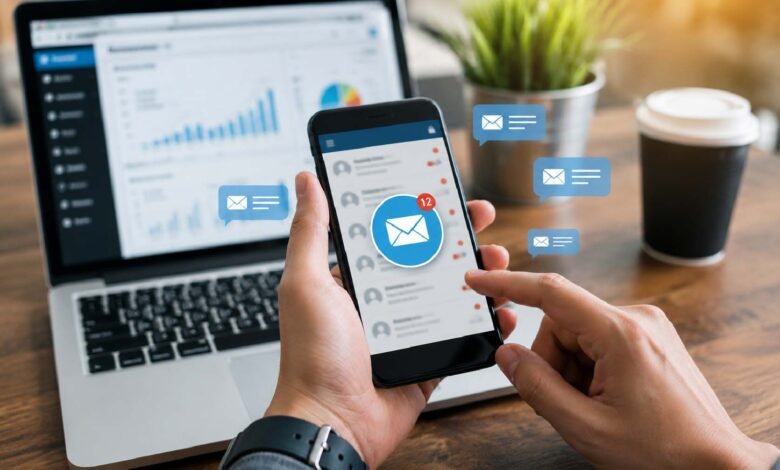
Email gets ignored. Apps get uninstalled. A text message gets read within three minutes of landing, by the vast majority of people who receive it, and that pattern has held across demographics and sectors for years. Businesses that need customers to actually see something still reach for SMS because, practically speaking, nothing else is as reliably read.
Setting it up to do something useful beyond a one-off blast is where most companies either get it right or leave most of the value sitting on the table.
What are SMS services?
Business SMS services are platforms that let companies send messages at scale, through a managed system rather than a personal phone. The messages can be transactional: a delivery update, a booking confirmation, a two-factor authentication code, or part of a two-way exchange with a customer or an automated flow.
SMS services from DID Global cover 150+ countries, with sender ID management and delivery reporting built in from the start. Setup takes hours rather than weeks, and the platform handles a handful of daily messages or tens of thousands with no change in architecture on your end.
How business messaging platforms work
A business SMS platform sits between your systems and the mobile networks. You send a request through the platform’s interface or via API, the platform routes the message through carrier connections, and it arrives on the recipient’s phone. Delivery receipts come back through the same chain.
What a proper business platform gives you beyond a consumer tool: sender ID that shows your company name rather than a random number, opt-out management that keeps you compliant with UK regulations, and delivery reporting that tells you what actually happened rather than just confirming the message left your system.
Common use cases for companies
The businesses using SMS well have identified the specific moments in the customer journey where a timely message changes an outcome. An appointment reminder sent 24 hours out cuts no-shows. A delivery notification sent when the driver is 20 minutes away stops customers ringing the support line. A payment reminder sent on the due date collects more money than one sent a week later.
Timing and relevance do the work here. The message itself can be short and functional.
Notifications, reminders and alerts
Notifications work because customers expect them. A booking confirmation, a dispatch update, a collection reminder: when the message says what it should say at the right moment, it builds confidence without requiring anything from the customer.
Alerts are different. A fraud warning, a service outage, an urgent account change. These arrive uninvited, so the bar is higher: they need to be accurate, relevant and genuinely time-sensitive. An email about a suspicious transaction that someone reads three hours later is considerably less useful than a text they see in three minutes. For anything where timing affects the outcome, SMS is the right channel.
Automation opportunities with SMS
Sending texts manually is not a strategy. The businesses getting real value from SMS have connected it to the systems they already use and set messages to fire automatically when something happens: a booking is made, a payment fails, a support ticket closes, a customer hasn’t engaged in 90 days.
Once the trigger logic is built and tested, it runs without anyone touching it.
Trigger-based messaging workflows
A trigger fires a message when a defined condition is met. Someone completes a purchase: order confirmation goes out. A delivery is marked for dispatch: tracking link goes out. A subscription is three days from renewal: reminder with a management link goes out.
Where it gets more useful is when workflows chain together. A reminder fires. No response after 48 hours: a follow-up goes out with a different copy. Still no action: the contact gets flagged for a human. The sequence runs on its own; a person only steps in when the automation has already tried twice and got nowhere.
DID Global supports API-based triggering, so workflows connect directly to whatever system generates the events: an e-commerce platform, a booking system, a CRM, a custom internal tool.
Integrating SMS with CRM and websites
When SMS connects to a CRM, messages log against contact records automatically. When it connects to a website or e-commerce platform, purchase events and form submissions trigger messages without anyone manually setting them up each time. When it connects to a helpdesk, ticket updates go out by text as well as email, whichever the customer actually reads.
A disconnected SMS platform creates the same problem as any isolated channel: someone reconciles data by hand, messages go out without context, and there’s no clear picture of what a customer has received or how they responded.
API-based communication flows
The API makes SMS genuinely flexible. Messages can be triggered by any event in any connected system, with content personalised from the data that system holds.
A booking platform sends a confirmation the moment a slot is reserved, addressed by name, with the specific time, location and a calendar link. A CRM sends a follow-up the day after a sales call, referencing what was just logged. Once the integration is in place, none of this needs manual input per message.
DID Global’s SMS API supports standard integration workflows with delivery webhook support. A developer familiar with REST APIs can connect it to an existing system in a day.
Measuring delivery and response performance
Platforms that only confirm a message left your system rather than confirming it reached the handset leave you guessing about what’s actually working. Delivery reporting worth using shows delivered versus failed at minimum, with failure reasons where the carrier provides them.
From there: response rates on two-way messages, click rates on links, conversion rates where the message sits inside a funnel. Straightforward metrics that answer whether the channel is doing its job.
The pattern worth watching is delivery rate by destination. Campaigns sending to international numbers see variation by country and by carrier. Some routes are reliable at all hours; others have gaps at specific times or for specific networks. Spotting those gaps before a campaign runs on bad assumptions saves considerably more hassle than spotting them after.
DID Global’s reporting covers per-message delivery status and aggregate campaign data, clear enough to act on rather than just accurate enough to file.
For More Information Visit: Rare Magazine