Why Restaurants Are Building Custom Software Instead of Using Generic Apps
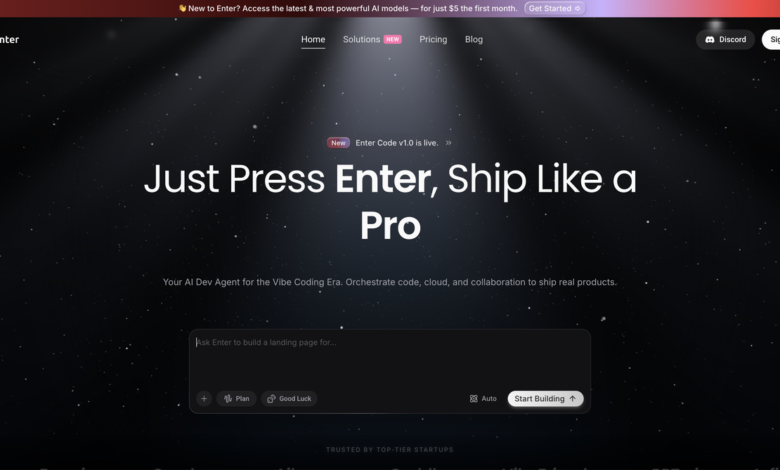
The restaurant industry runs on margins so thin that a single bad month can undo a good quarter. Every tool a restaurant owner pays for either justifies its cost through efficiency or quietly drains money that should have gone somewhere more useful. That is why a growing number of restaurant owners are making a decision that would have seemed strange a few years ago. They are building their own software instead of paying monthly for platforms that were never designed with their specific operation in mind. Enter Pro has become a resource that owners in this space are increasingly pointing to, and for good reason. The platform is built around the idea that business owners who deeply understand their own problems should be able to build their own solutions, without needing a developer on staff or an agency on retainer. For restaurants in particular, where the gap between what a generic tool offers and what the operation actually needs can be enormous, that capability changes everything.
Most restaurant software is built for an imaginary average restaurant. It handles reservations in a way that works for a hundred-seat dining room but creates friction for a thirty-seat neighborhood spot with a completely different flow. It processes orders in a way that assumes a certain kitchen layout or service style. Customizing it costs extra, takes time, and usually produces something that is almost right but not quite. The owner ends up paying for features they do not use and working around the absence of features they actually need.
The Problem With Off-the-Shelf
Generic platforms are designed to serve the broadest possible market, which means they optimize for the average case. Restaurants are not average cases. A sushi counter with twelve seats operates nothing like a casual Italian trattoria with outdoor seating and a private dining room. A ghost kitchen running four virtual brands has completely different needs than a food truck that parks at three different locations each week.
Fast-casual chains sit at a different point in this spectrum. A brand like Dave’s Hot Chicken, which grew from a single Los Angeles parking lot in 2017 to over 400 locations worldwide, built its operation around radical simplicity. A focused menu, a clear ordering process, and a dedicated rewards app that keeps customers coming back without relying on third-party platforms for loyalty data. That clarity of purpose is part of what makes fast-casual the most resilient restaurant format in the current market. For anyone unfamiliar with how that model works at scale, the Dave’s Hot Chicken menu guide covers the full operation from menu to locations to app features.
When you are trying to run a tight, profitable operation, working around software that does not quite fit is not a minor inconvenience. It is a daily tax on your efficiency. Staff spend time on workarounds. Orders get miscommunicated. Reporting does not give you the information you actually need to make decisions. You end up managing the software instead of running the restaurant.
How Custom Builds Are Becoming Accessible
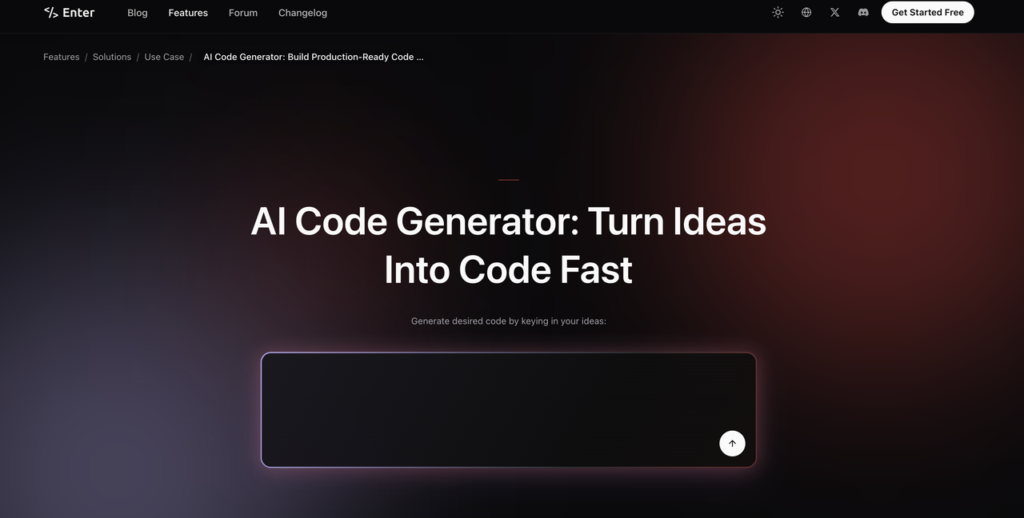
The reason restaurant owners are now able to build their own tools has a lot to do with platforms that make development accessible to people without programming backgrounds. Using an AI code generator within a build environment like Enter Pro means a restaurant owner can describe what they need in plain language and have a working system take shape around those specifications. A custom table management flow that reflects how their specific dining room actually works. An orderly display for the kitchen that matches how their team communicates. A loyalty program built around their own customer data rather than a third-party database they do not fully control.
Enter Pro is particularly worth understanding here because it is not just a tool for writing code. It is a full development environment that handles architectural decisions, database setup, and hosting configuration. For a restaurant owner, that means the technical complexity that used to require a professional developer is managed by the platform, while the decisions about what to build and how it should work remain entirely in the owner’s hands. The result is software that fits the operation instead of forcing the operation to fit the software.
Real Examples of What Gets Built
The range of what restaurant owners are actually building when they have access to these tools is broader than most people expect. Reservation systems that account for the specific quirks of a particular dining room, including which tables can be combined, which ones are preferred by regulars, and how the flow changes between lunch and dinner service. Inventory tracking that connects to the menu in real time so the team always knows what is eighty-sixed before a customer has to be told. Staff scheduling tools that reflect the actual shift patterns of a specific operation rather than the generic weekly grid that most scheduling apps assume.
Each of these sounds like a small improvement. In aggregate, they represent an operation that runs with less friction, less waste, and better information than one built on generic tools that were never quite right to begin with.
The Cost Comparison
One of the practical questions any restaurant owner asks before investing in a custom build is whether it actually makes financial sense. The answer depends on what they are currently paying for software that does not fit well, how much staff time is being spent on workarounds, and how much value they would get from having better data about their operation.
For most restaurants paying for multiple generic platforms, the subscription costs alone often exceed what a custom build would cost in the first year. When you add in the efficiency gains from software that actually matches the workflow, the financial case gets stronger. This is not a solution for every restaurant. A chain with hundreds of locations needs enterprise software with enterprise support. But for the independent operator who knows their business well and wants tools that reflect that knowledge, building custom is increasingly the smarter financial choice.
The Shift in Who Gets to Build
What is really changing here is not just the technology. It is who gets to be a builder. For most of the history of software, the ability to create custom tools was reserved for people with technical training or for businesses with budgets large enough to hire people with technical training. Everyone else made do with what was available off the shelf.
That restriction is lifting. A restaurant owner who has spent fifteen years understanding exactly how their operation works now has access to the same ability to build custom software that used to be exclusive to much larger and better-resourced businesses. The knowledge advantage they have always had about their own operation can now translate directly into tools that reflect that knowledge.
Conclusion
The restaurant industry is not an obvious place to look for early adoption of new development technology. But the economics make perfect sense when you think about them. Tight margins, highly specific operational needs, and genuine frustration with generic tools that almost work have created a strong incentive to find a better way. The tools to build that better way are now accessible to people who have never written a line of code. For restaurant owners who know exactly what they need and have never been able to get it from an off-the-shelf product, that accessibility is the change they have been waiting for.